Bunions
What is a Bunion?
A bunion is a “bump” on the big toe, more specifically the metatarsophalangeal (MTP) joint, that forms when the bone or tissue surrounding the big toe functions improperly. A bunion occurs when the big toe begins to deviate toward the second toe. Because this joint carries a lot of the body's weight while walking, bunions can cause extreme pain if left untreated. The MTP joint itself may become stiff and sore, making even the wearing of shoes difficult or impossible.
Who Gets Bunions?
Bunions are more common among people with a family history of bunions, especially females, and those with an abnormally long or abnormally shaped metatarsal.
What causes Bunions?
Bunions form when the normal balance of forces on the big toe joint are disrupted, leading to instability and deformity. Bunions are brought about by years of abnormal motion and pressure over the MTP joint. The most common cause of bunions is heredity. Although bunions tend to run in families, it is the foot type that is passed down and not the actual bunion. The abnormal functioning foot leads to pressure being exerted on the foot results in bone and joint deformities such as bunions and hammertoes. Other causes of bunions are foot injuries, neuromuscular disorders, or congenital deformities. Also, occupations that place undue stress on the feet are also a factor; ballet dancers, for instance, often develop the condition. Wearing shoes that are too tight or pointy is another common factor, this explains why bunions occur commonly in women.
What are symptoms of Bunions?
Symptoms of a bunion include the development of a large bump on the outside edge of the big toe. Also redness, swelling, or pain at or near the MTP joint. Corns or other irritation may also occur at side or bottom of the first and second toes. Also restricted or painful motion of the big toe.
When do I see a Doctor for my Bunions?
If pain occurs and/or persists, you seek a podiatrist soon. Bunions are progressive so they tend to get larger and more painful if left untreated, making non-surgical treatment less of an option.
How do I prevent Bunions?
Try to wear supportive shoes that properly support the arch, avoid shoes with a narrow toe box, and most importantly see your podiatrist at the first signs or symptoms of a bunion deformity to stop or slow its progression.
Treatments
What are the Treatments for Bunions?
Treatment options vary with the type and severity of each bunion, although identifying the deformity early in its development is important in avoiding surgery. The primary goal of earliest treatment options is to relieve pressure on the bunion and slow the progression of the joint deformity.
Non-Surgical
Surgical
Bunionectomy:
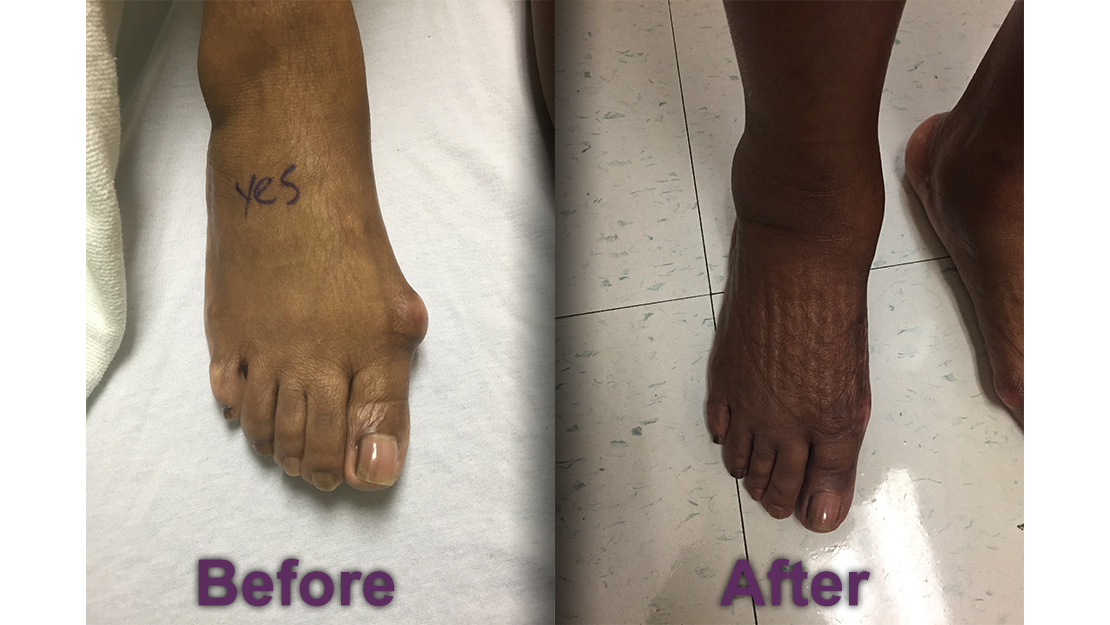
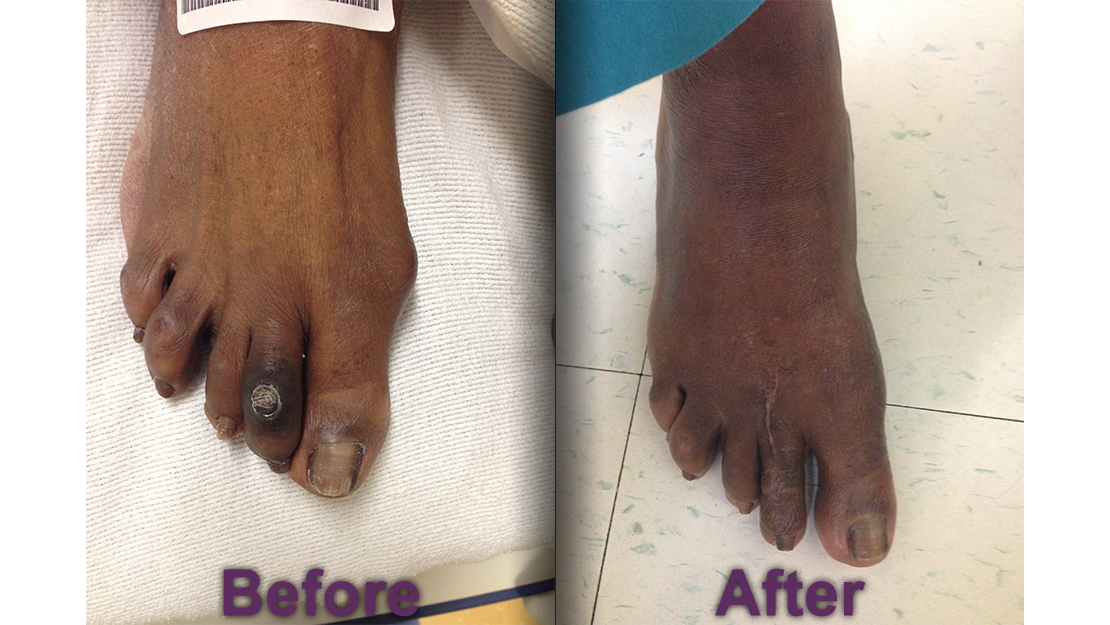
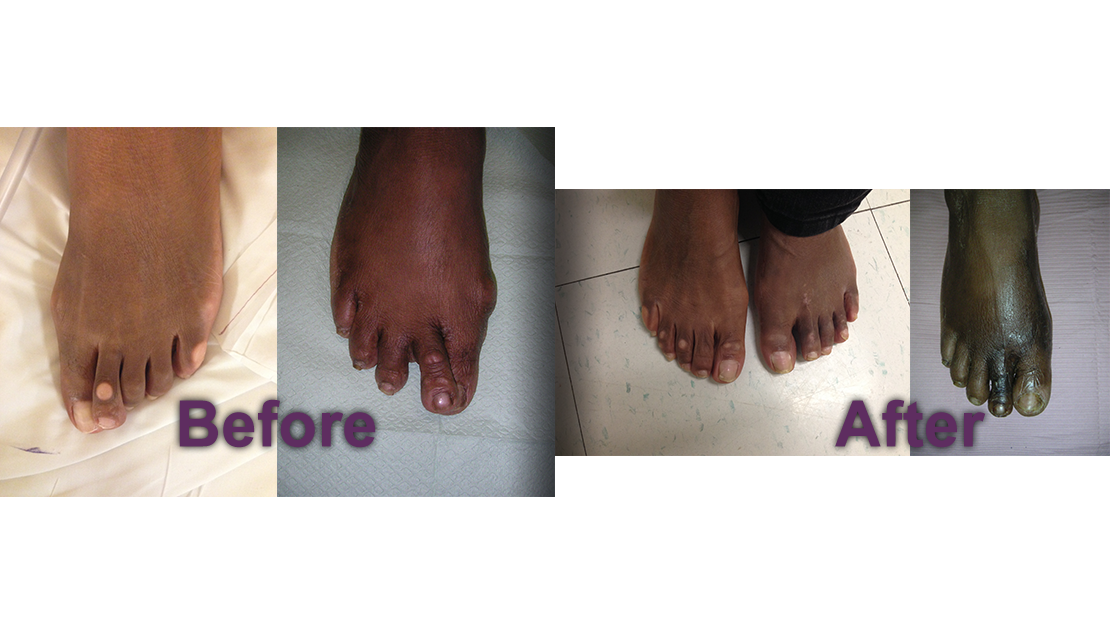
When non-surgical or conservative treatment fails or the bunion progresses to a point of severe pain and deformity, surgical is strongly considered. Several surgical procedures are available to the podiatrist. The surgery will remove the bony enlargement, restore the normal alignment of the toe joint, and relieve pain. A simple bunionectomy, in which only the bony prominence is removed, may be used for the less severe deformity. Severe bunions may require a more involved procedure, which includes cutting the bone and realigning the joint. Recuperation takes time, and swelling and some discomfort are common for several weeks following surgery.

Locations
West Orange

Phone: (973) 337-2893 | Fax: (201) 228-1689
East Orange

Phone: (973) 337-2893 | Fax: (201) 228-1689